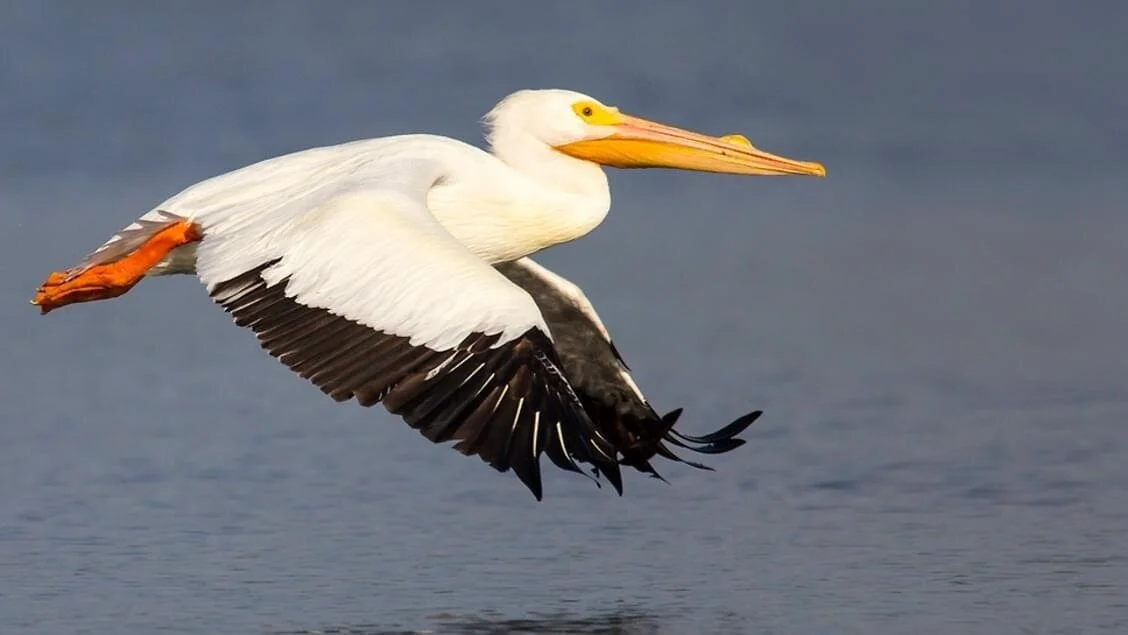
Common Ground Dove | Red Knot | Semipalmated Sandpiper | Laughing Gull | Glaucous-winged Gull | American White Pelican | Northern Parula | Hooded Warbler | Summer Tanager
Stilt Sandpiper | Sabine’s Gull | Nazca Booby | Cocos Booby | Western Cattle-Egret | Broad-winged Hawk | Zone-tailed Hawk | Tropical Kingbird | Pacific Wren | White Wagtail | Grasshopper Sparrow | Clay-colored Sparrow | Dark-eyed “Gray-headed” Junco | Dark-eyed “Pink-sided” Junco | White-throated Sparrow | Green-tailed Towhee | Ovenbird | Black-and-white Warbler | Prothonotary Warbler | Tennessee Warbler | Lucy’s Warbler | Northern Parula | Blackburnian Warbler | Chestnut-sided Warbler | Palm Warbler | American Redstart | Painted Redstart | Summer Tanager
Broad-billed Hummingbird | Ridgway’s Rail | Sabine’s Gull | Nazca Booby | White-headed Woodpecker | Tropical Kingbird | Gray Catbird | Evening Grosbeak | Cassin’s Finch | Clay-colored Sparrow | Dark-eyed “Gray-headed” Junco | Green-tailed Towhee | Black-and-white Warbler | American Redstart | Northern Parula | Chestnut-sided Warbler | Palm Warbler | Summer Tanager | Indigo Bunting
White-winged Dove | Ridgway’s Rail | Arctic Tern | Sabine’s Gull | Nazca Booby | Masked / Nazca Booby | Cocos Booby | WHITE IBIS | Western Cattle-Egret | Broad-winged Hawk | Zone-tailed Hawk | Flammulated Owl | White-headed Woodpecker | Tropical Kingbird | Plumbeous Vireo | Pinyon Jay | Clarks Nutcracker | Gray Catbird | Sage Thrasher | Varied Thrush | Evening Grosbeak | Red Crossbill | Chestnut-collared Longspur | Clay-colored Sparrow | Dark-eyed “Gray-headed” Junco | Swamp Sparrow | Green-tailed Towhee | Bobolink | Black-and-white Warbler | Tennessee Warbler | Lucy’s Warbler | American Redstart | Blackburnian Warbler | Chestnut-sided Warbler | Rose-breasted Grosbeak | Dickcissel
Ridgway’s Rail | Sabine’s Gull | Manx Shearwater| Nazca Booby | Cocos Booby | Western Cattle-Egret | Williamson’s Sapsucker | Tropical Kingbird | Least Flycatcher | Pinyon Jay | Clark’s Nutcracker | Yellow-green Vireo | Evening Grosbeak | Lark Bunting | Clay-colored Sparrow | Green-tailed Towhee | Orchard Oriole | Northern Waterthrush | Black-and-white Warbler | Tennessee Warbler | Lucy’s Warbler | American Redstart | Northern Parula | Magnolia Warbler | Blackburnian Warbler | Chestnut-sided Warbler | Blackpoll Warbler | Palm Warbler | Rose-breasted Grosbeak
Ridgway’s Rail | Semipalmated Sandpiper | Red Phalarope | Common Tern | Little Gull | Least Bittern | Reddish Egret | Williamson’s Sapsucker | Tropical kingbird | Least Flycatcher | Bell’s Vireo | Yellow-Green Vireo | Pinyon Jay | Clark’s Nutcracker | Purple Martin | Evening Grosbeak | Black-throated Sparrow | Clay-colored Sparrow | Green-tailed Towhee | Bobolink | Orchard Oriole | Ovenbird | Northern Waterthrush | Black-and-white Warbler | Prothonotary Warbler | Tennessee Warbler | Lucy’s Warbler | American Redstart | Cape May Warbler | Northern Parula | Blackburnian Warbler | Chestnut-sided Warbler | Blackpoll Warbler | Summer Tanager | Rose-breasted Grosbeak | Indigo Bunting | Painted Bunting | Dickcissel
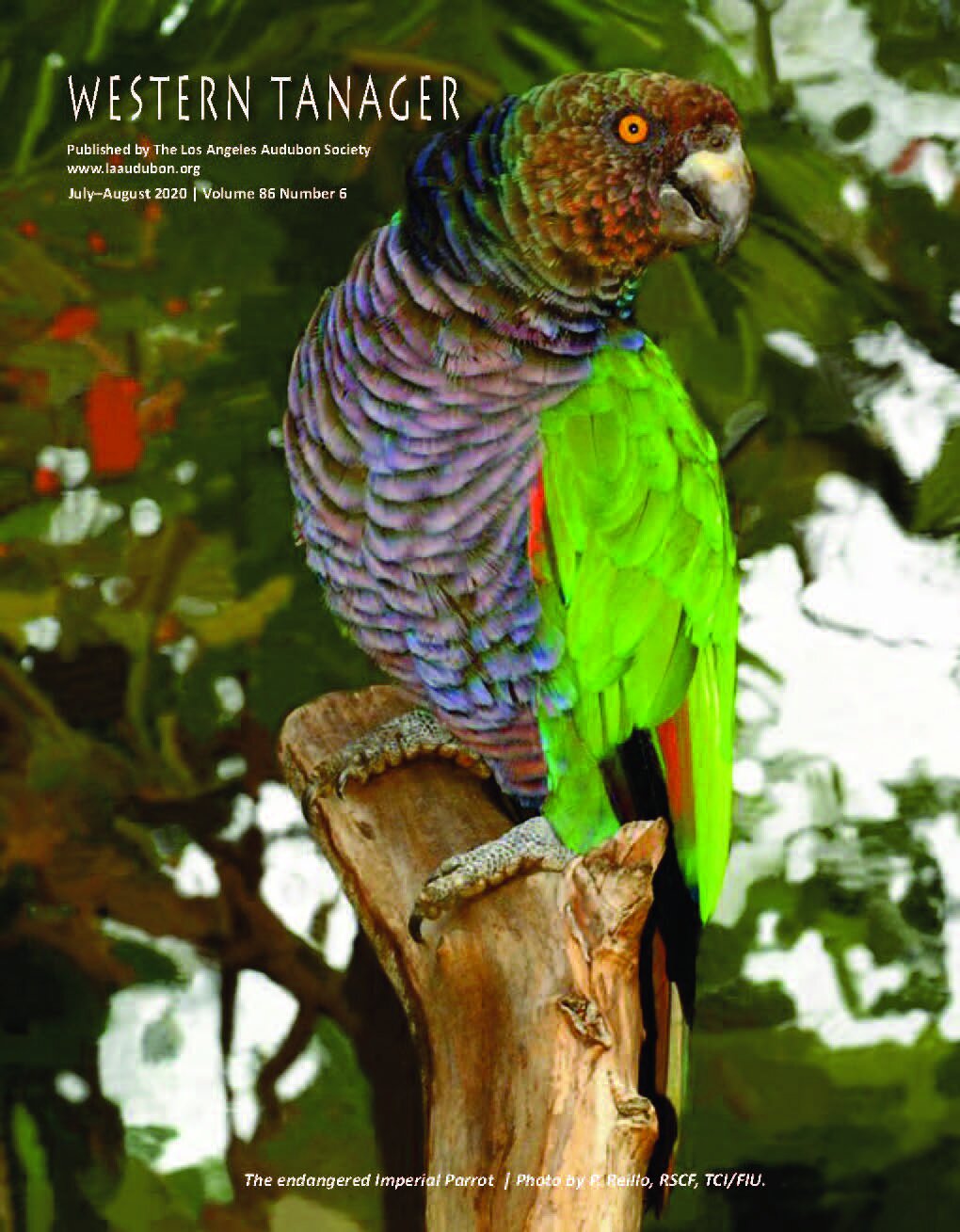
The endangered Imperial Parrot | Photo by P. Reillo, RSCF, TCI/FIU.
WINGING IT—Discovering the Caribbean Birding Trail, Part II, Dominica — The Rare Parrots' Paradise | By Robbie Lisa Freeman
BIRDS OF THE SEASON — June 2020 | By Jon Fisher
YOUNG BIRDERS—Charismatic and Clever: The Cactus Wren (campylorhynchus brunneicapillus) | By Dessi Sieburth
OUTDOOR EDUCATION—Experience & Perspective | By Cindy Hardin
INTERPRETING NATURE—Making Connections Between Birding and Food Gardening | By Ingrid Carrillo
CONSERVATION CORNER—Rio de Los Angeles State Park Riparian Breeders | By Andy Birch
Top Ways To Preserve Nature While Hiking, by Rachel Gaffney
Photo Essay — India Journal: December 2019, by Rustom Jamadar
The Fledgling, by Brenda Rees
Owls Nesting in Our Yard, by Janice Rayman
Reclaiming Ourselves Through Nature, by Danny Humphrey
Two Robins in a Birdbath, by Janine Soucie Kelley
No Sparrows, by Annie Margis
Birding Notes from the Ebell Club 1917, by Judith Thompson
POEM: Ballona Stories, by Joyce Karel
Once in a while, it’s good to celebrate a conservation success story on public land, right in the heart of the city. Rio de Los Angeles State Park appears to be a real success story in terms of re-wilding a small section of a park that sits within an intensely urbanized setting. The park is located in northeast Los Angeles, approximately 2.5 miles north of downtown and is located next to the former Union Pacific Rail Yard called the Taylor Yard complex, which is also under active long-term planning as a city park.
Being visited by wild birds while working in my outdoor office is an invigorating momentary distraction from my labors. Every morning before I plug in on the patio table, I open my rodent-proof bird food container and scoop out seeds. nyjer for the goldfinches, corn for the sparrows, black sunflower seeds for the mockingbirds, suet for whatever bird comes to call, plus sugar-water for the hummingbirds.
Not exotica that you would grab your bins, rev-up your SUV and drive across three states to observe, beaming with pride as you record its sighting and count on eBird. Rather the robin is a friendly bird, more like a next-door neighbor.
You won’t have to trek to the Amazon or Patagonia to see a robin, though once-in-a-lifetime trips like those are inked on many a bucket list. No. You will spy the robin in Ponderosa pine forests, urban landscapes and grassy lawns pecking the ground for earthworms. Her nest is made of mud, her eggs an eponymous and beautiful blue that you just might decide is the perfect color for your kitchen.
One evening in mid-May, two friends and I were sitting on our front porch (with masks and social distancing) after an evening hike. Their musicians’ ears heard owls! The next day I started looking for them at dawn and dusk. Then, in the middle of the following day I saw a head sticking out of the old nesting box I had built for an acorn woodpecker which my husband, Marc, and I rescued from a downed tree six years ago.
The grayish brownish thing I discovered underneath the salvia in the backyard garden made me hold my breath for weeks.
I discovered this hidden thing about four years ago around the end of April. A jerky movement at the top terrace caught my eye. Squatting down sumo-style, I gingerly lifted the leaves. All right, what are you? I was face-to-beak with a baby bird. The bird froze and I immediately let go of the leaves.
Oh great. Just great.
Sign up to join our mailing list to receive our newsletter and updates on upcoming events.


