
Prepared by Nick & Mary Freeman, Lancaster Christmas Bird Count Compilers
LA Audubon Society, Lancaster CBC Sponsor
First, a special note about L.A. County: As counties go, Los Angeles is quite remarkable. For one thing, there are a huge number of CBC circles in LA county - 10 completely in, with another 2 partly in the county! Also, in all of the United States, San Diego County is the only other that can lay claim to having pelagic birds, montane birds, and desert birds, all residing comfortably in their own ecosystems. Yes, seeing a Verdin, a LeConte’s Thrasher, and a Mountain Bluebird on one LA County CBC; then turning around the next day and seeing a Parasitic Jeager, a Black Oystercatcher, and a Lewis’ Woodpecker on another LA County CBC, is entirely possible - although not easy
The 47th Lancaster CBC held on Saturday, Dec. 20 was a remarkably calm (start: 0 -finish: 0 to 20 mph) and temperate (45°- 75°F) affair, under light cirrus (0-30%) skies. Mary and I would once again like to thank all who came out to tally birds in the Lancaster area. We had 24 participants this year, about spot-on with our Count Average of 25 participants. While some people had very good reasons for cutting the day short – which is nonetheless appreciated and acceptable – only two teams counted after lunch. While Lancaster can be blowing like a banshee by afternoon, this was a remarkably calm (mostly 0 – 12 mph) afternoon. Participants, please consider urging your teams to count into the afternoon next year, if possible.
How the Lancaster CBC did this year:
Total Species Count
105 Species were tabulated this year, which is 5 under the Count Average of 109.8, and 20 under the Max of 125 species seen in 2020. 105 species betters only 8 other years (17%) of this long and illustrious count, so not much to boast about.
Total Bird Tally
18,466 Birds were tallied for the 2025 Count. Not many birds compared to a corrected 47-Yr. Count Avg. of 36.7K over the years. Recently 2017 – 2019 had an Avg. of 13.3K (15K, 13K, and 12K), which were especially low years for this CBC. More recently, including this year, 2020 – 2025 came in with an Avg. of 18.9K (26K, 15K, 19K, 16K, 19K, and 18.5K); so hopefully overall numbers are stabilizing or turning around a bit. Total Birds is only down 500 from last year with 7 less participants in the field (and probably a few more half-days this year), so I think we are at least treading water.
New Species: Never Before Seen on the Lancaster Christmas Bird Count – NONE!
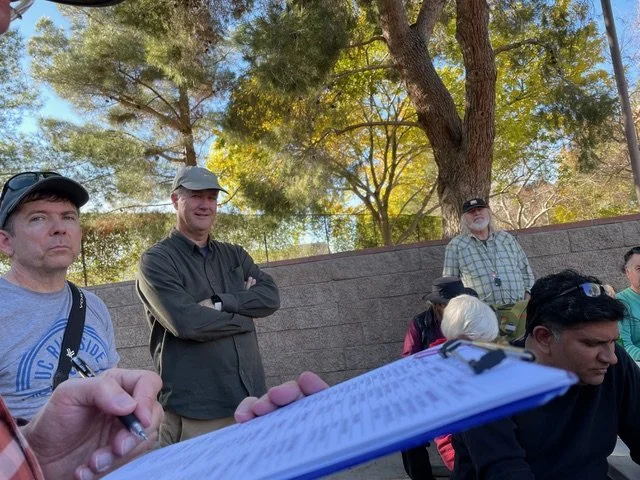
Photo credit: Mary Freeman, Lancaster CBC 2025
Now for the Highlights, Lowlights, and Remarkable Sightings, or Lack Thereof:
Remarkable Sightings
Wood Duck (1), most recently seen 2011. (2) others ever for the Count. Valerie Anderson & David Barr in the Apollo Park Area. Excellent find!
Costa’s Hummingbird (1), of only (4) ever for the Count. Most recently 3 yrs. ago (’97, ’11, ’22). Kevin Lapp in Apollo South Area.
Clark’s Grebe (1), Avg. (0.4). David Koeppel at the Lancaster Sewage Ponds. Most recent: ’00 (1). (15) of (19) ever seen were way back in ’86 – the only year with over 2 CLGR recorded. I.D. issue?
Osprey (1), Avg. (0.1). (5) ever, most recent in ’16. Flyover at the Country Club, heading S, as seen by Nick & Mary Freeman, Paul Weers.
Pygmy Nuthatch ! ! ! (1), Avg. (0.1). Only (2) others ever seen, both in 1987 on the 9th year of the CBC. It’s been a long time. Once again, the Freemans & Paul Weers. Probably the Bird of the Count!
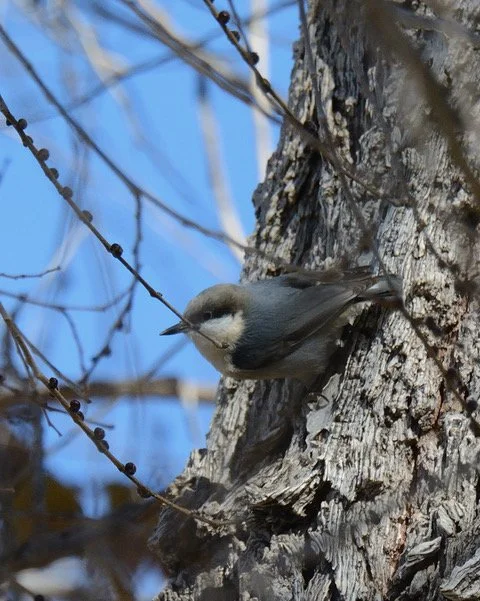
Photo credit: Paul Weers, Pygmy Nuthatch, Lancaster CBC 2025
Max for the 47-Year Count
Ring-necked Duck (214), Avg. (34). Only over 100 thrice, including 2007 (143). Maximum is more than twice the average of the last 7 yrs. Percent increase in numbers like Redhead!
Anna’s Hummingbird (28), old Max. (25) from 2 yrs. ago. Avg. (10), which ANHU hit in 2000, missing this mark only three times since.
Allen’s Hummingbird (3), ties Count Max. in ‘20. Of 11 ever seen, all were recorded in the last 9 yrs. Here to stay! Note: first 4 yrs seen, always at one feeder. This year, in 3 separate areas.
Black Phoebe (59), Avg. (22). Beats out the Max. of (50) from 2 yrs. ago, and (47) from last year. Irrigation and matured plantings in urban & suburban areas likely to account for continued success of this species.
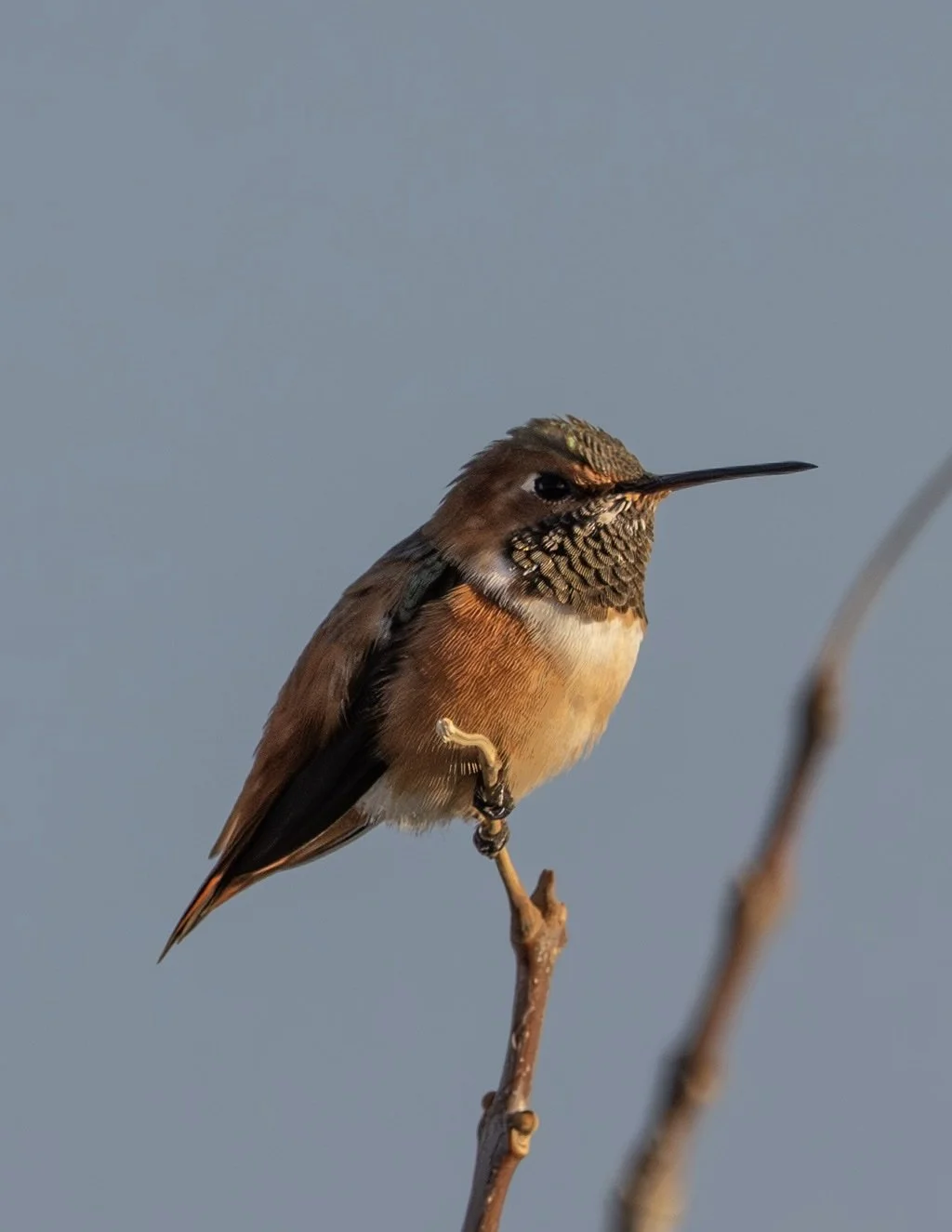
Photo credit: Charles Hood, Allen’s Hummingbird, Lancaster CBC 2025
Remarkably High or Trending Up (*see below)
Canvasback (24), Avg. (9). Only 2 counts over (20) since 1983 (153 seen).
Redhead*(13), Avg. (12). Over Avg. all of last 7 yrs., but only 5 times in previous 39 yrs. Change in wintering distribution? High counts 1983 (110), and 2003 (53); irruptive.
Rock Pigeon (1,398), Avg. (490). Max. of (2,214) in ’96. Only over 1K twice before (’88, ’96). Both over 2K. 1K ROPI were in Ag & Dairy lands. Doing well!
Verdin (10), Avg. (3.4). High (15). All 5 counts over (9) in last 7 yrs. These tiny desert obligates seem able to make a go of it while the desert habitat and all other desert birds are struggling. Fascinating.
Historic Minimums for the Count
Loggerhead Shrike (10), Avg (40). Previous Mins. of (13) were both in last 6 yrs. Max. (97)! Should be fairly common in healthy J-tree and Atriplex scrub, Ag windbreaks. Victim of depressed groundwater?
White-crowned Sparrow (494), Avg. (1.5K), Max. (3.9K). 4 of the 7 counts below 800 have been in the last 8 yrs., although the other 4 yrs. in the last 8 tallied over 1K WCSP, so hopefully this trend can turn around. Decreased agriculture, seed bank in the soil, struggling scrub not seeding well. Idle speculation. Maybe the heavy rains this year will turn things around?
Western Meadowlark (40), Avg. (270), Max. (875)! Previous Min. was (88) in ’89. Numbers fluctuate considerably on this CBC. Our areas in both Lancaster & Malibu CBCs were skunked here, so maybe something regional/climate-related is going on.
Notable Misses and Underachievers
Northern Harrier*(10), Avg. (29), Max (73). Second Lowest tally for the Count. Low of (3) in ’99 is the only count less than (11). Appears somewhat cyclical, but numbers have been lower on average lately.
California Scrub-Jay (0), Avg (1.9). Skunked 2 yrs. running, and 3 of last 4. Unheard of since the first 11 yrs. of the 47-year CBC. Not generally urban or suburban birds, so probably unable to take advantage of most in-town irrigation or feeders.
LeConte’s Thrasher*(0), Avg. (2.9). While we have been skunked by LETH 7 times over the history of the Count, 3 times were over the first 9 yrs, one in the middle and 4 over the last 8 yrs. of the Count. As LETH prefers undeveloped, dense Atriplex scrub and desert washes, I suspect that early skunks were due to lack of surveying in “desert wasteland”, and not lack of birds. The habitat was likely better then. It is disconcerting that we are often not finding LETH now, which seems likely to stem from poor scrub quality, caused by lack of groundwater.
(* designates California Species of Special Concern)