Rare Bird Alert - January 17, 2020

Trumpeter Swan | “Eurasian” Green-winged Teal | Barrow’s Goldeneye | American Oystercatcher | Mountain Plover | Solitary Sandpiper | American Bittern | Northern “Yellow-shafted” Flicker | Brown-crested Flycatcher | Tropical Kingbird | GREATER PEWEE | Pacific-slope Flycatcher | Eastern Phoebe | Cassin’s Vireo | Cliff Swallow | Pacific Wren | Clay-colored Sparrow | White-throated Sparrow | Orchard Oriole | Black-and-white Warbler | Lucy’s Warbler | Nashville Warbler | American Redstart | Painted Redstart | Summer Tanager

Esperanza Elementary School- Community and Habitat Building in the heart of Los Angeles

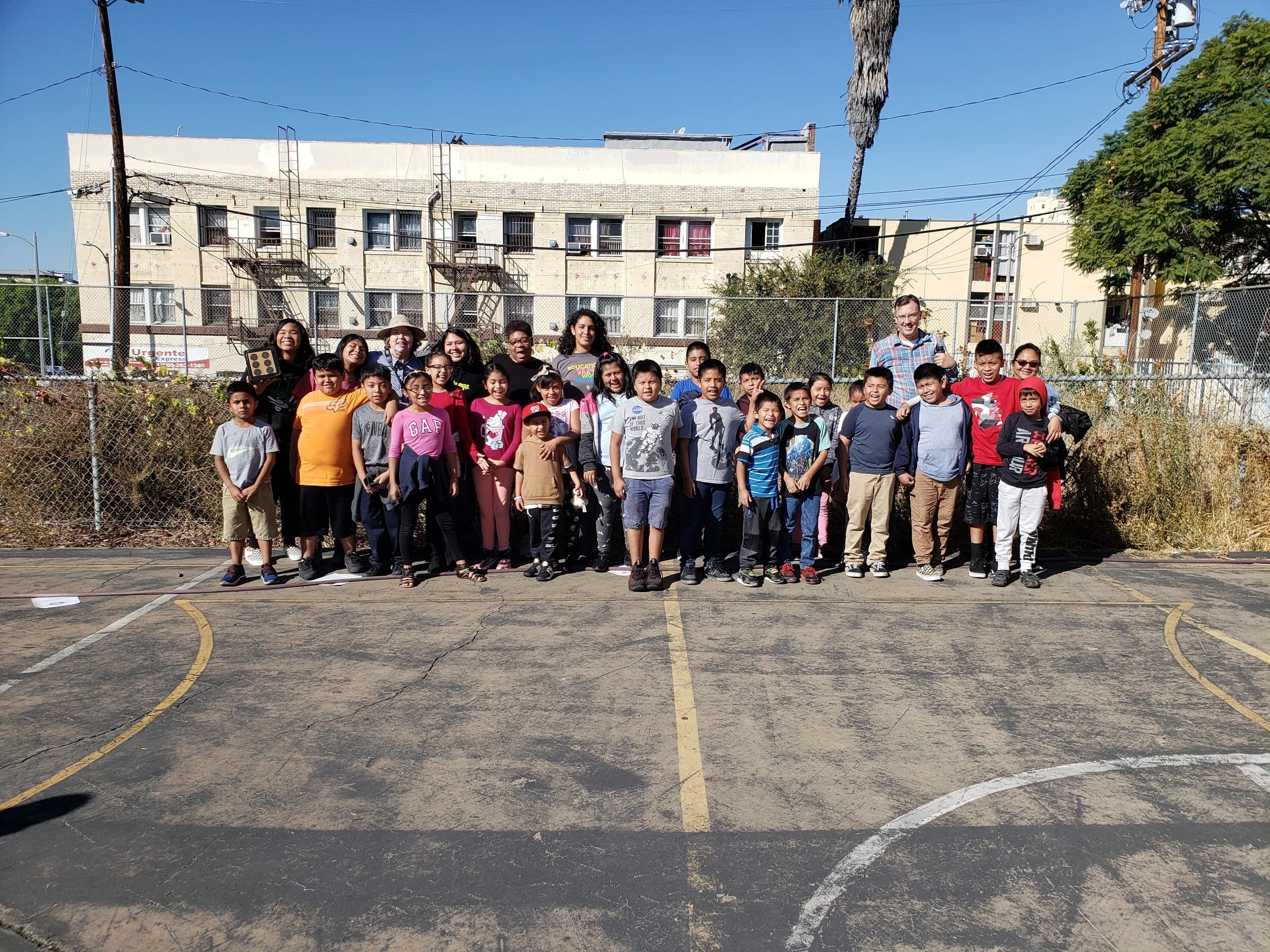
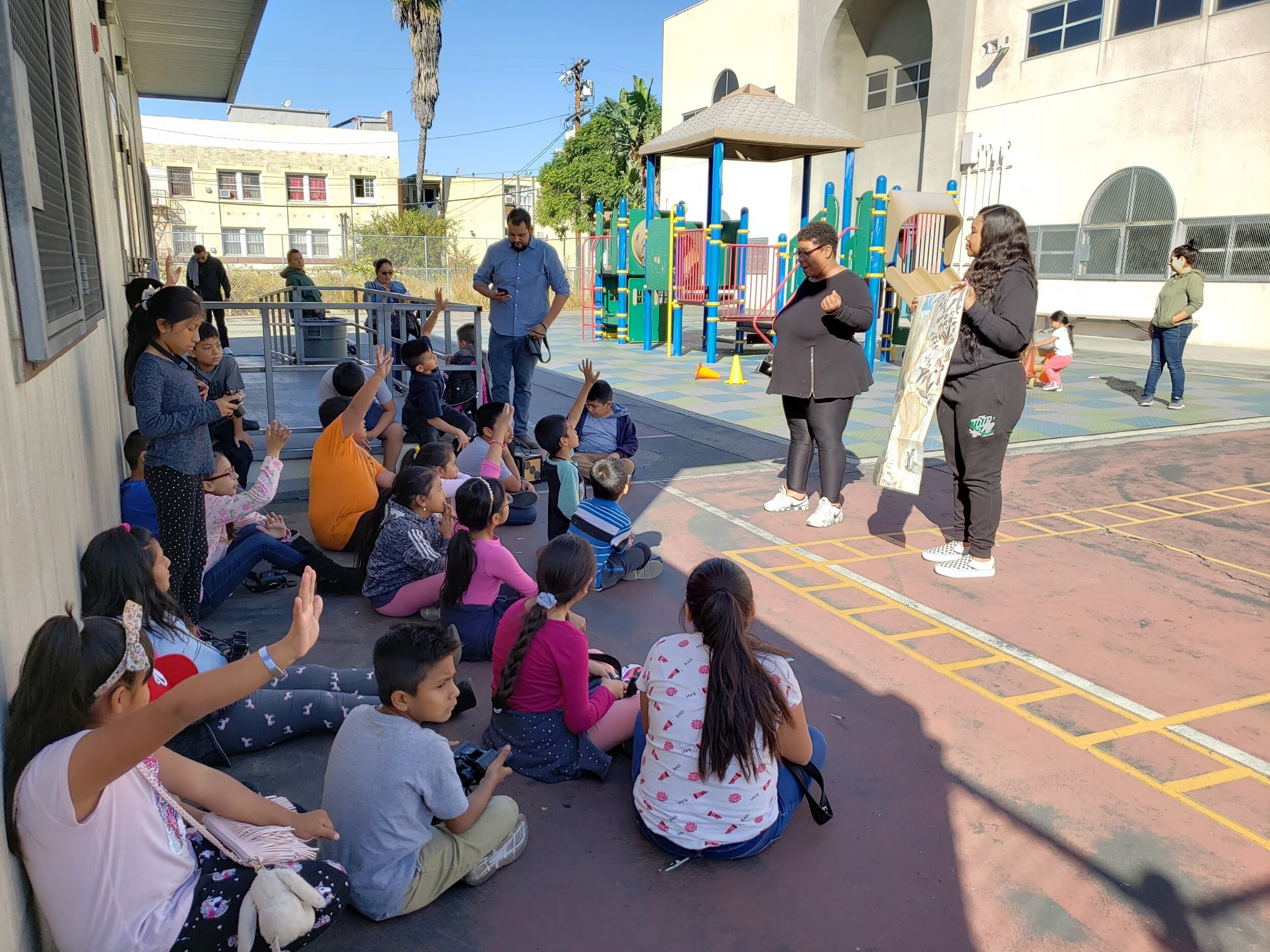
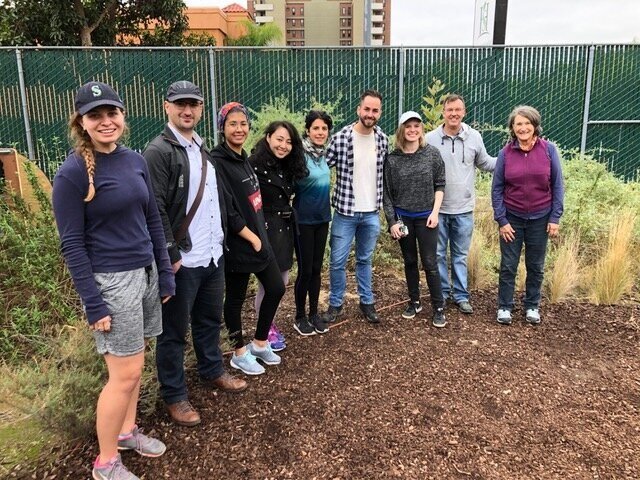
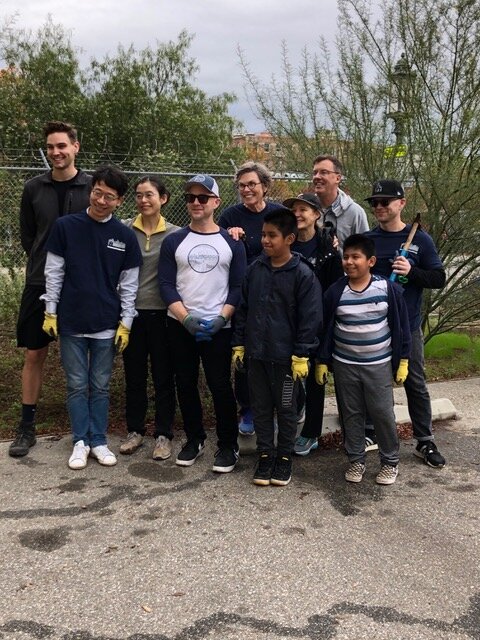
Esperanza Elementary School Students with Principal Brad Rumble and Los Angeles Audubon staff & volunteers and Baldwin Hills Greenhouse Program students.

Esperanza Elementary School Students with Principal Brad Rumble and Los Angeles Audubon staff & volunteers and Baldwin Hills Greenhouse Program students.

Published by Los Angeles Audubon Society in the Western Tanager, Vol 86 No. 3 Jan-Feb 2020

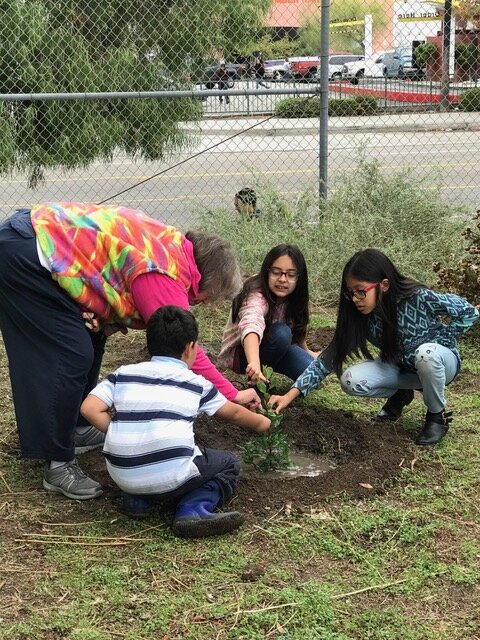
In October and November 2016, staff and Baldwin Hills Greenhouse Program students from the Los Angeles Audubon Society (LAAS) installed a schoolyard habitat at Esperanza Elementary School with the help of students and parents. This habitat is filled with California native shrubs and trees including, California Sagebrush, Black Walnut, White Sage, Gum Plant, and more. There are many benefits to installing this habitat including, but not limited to:

• Educational Resource — Teachers can use it as an outdoor classroom and cover many topics including the water cycle, plant adaptations, habitat, ecosystems and many more.

• Decreases Water Runoff — Permeable surfaces in the habitat allows rainwater to infiltrate the soil, providing water for the plants. This reduces pollutants to be carried away to the ocean.

• Increase in Native Wildlife — Esperanza is listed as a hotspot in eBird with 66 species and counting. Many migratory bird species use the habitat as a stopover site including the Yellow-rump Warbler, Burrowing Owl, and White-crowned Sparrow. In addition, other wildlife are found in this habitat including butterflies, praying mantis, ladybird beetles, native bees species, etc.

• A Greenspace in the City — Los Angeles is highly urbanized, especially near Downtown LA. The younger students are surrounded by asphalt, but this small green space allows for exploration and wonder.

• A sense of community — The surrounding community is brought together for planting and bird-watching.

Community Bird Walks

This past November [2019] LA Audubon staff member, Emily Cobar, concluded two grant projects with the South Bay/Palos Verdes Audubon (SB/PV) and the North American Association of Environmental Education (NAAEE) ee360 Community Fellowship and the Esperanza Elementary School community.

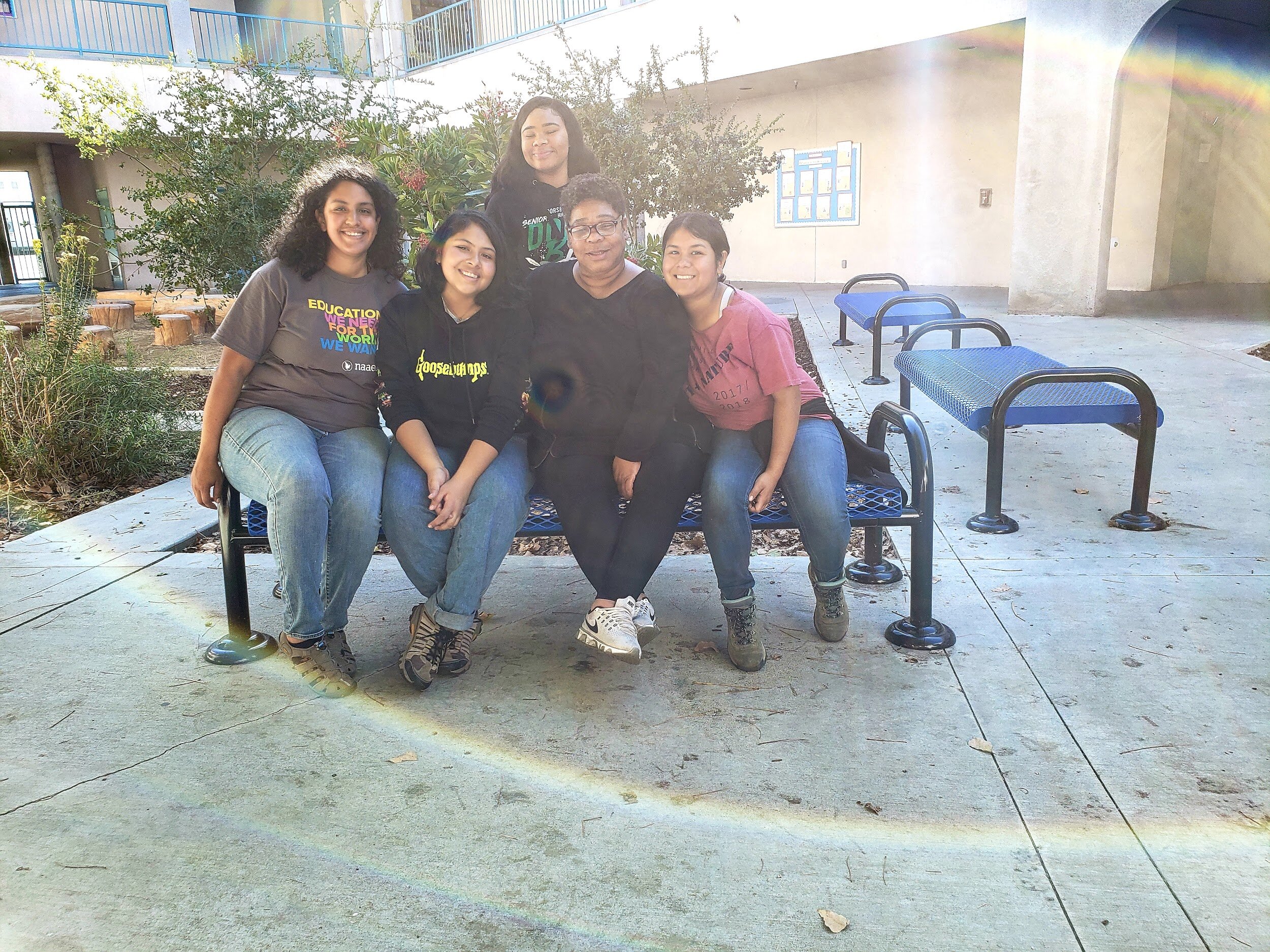
In past Western Tanager newsletters (September/October 2018 and September/October 2019 issues) – Emily covered how she was a recipient of the SB/PV Audubon mini-grant to lead community bird walks and to create calendars for the nature walk participants that included their own artwork and photographs; and how the ee360 opportunity offered her an incredible fellowship that provided professional development and leadership training. Through the fellowship, she also received a grant to provide stipends to college students and/or recent college graduates who lead the nature walks, scientific illustration workshops, and other environmental education activities at Esperanza. In the conservation and education field, there are a myriad of unpaid internships or volunteer programs, so stipends were significant to reward their time commitment and their meaningful work to the community.

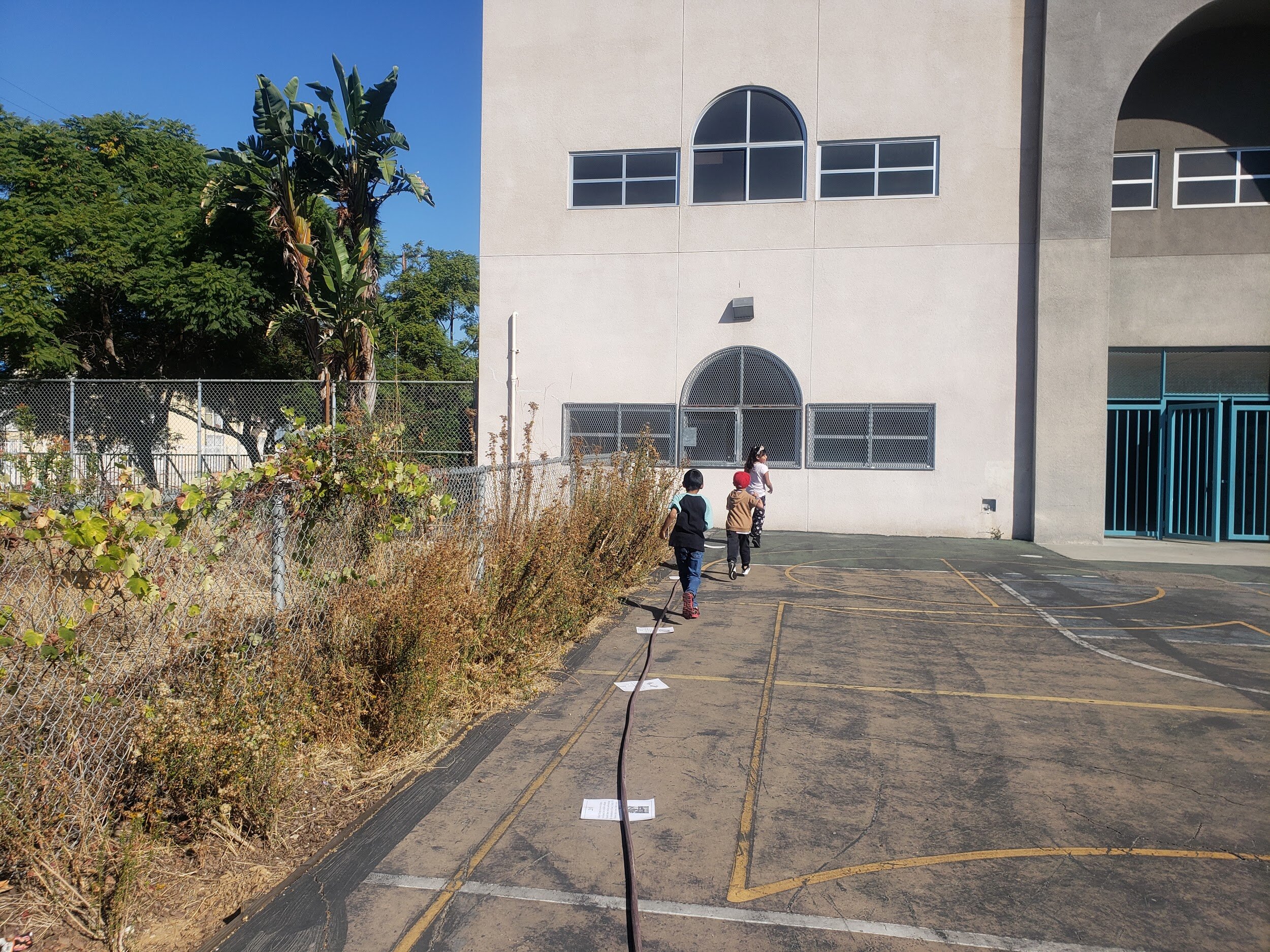
The nature walks started with coffee and breakfast for the participants. Then, Esperanza Elementary School principal, Brad Rumble, led a bird walk on campus while the ee360 interns assisted. After the bird walk, the ee360 interns, led a discussion about bird migration and introduced the migration game (an education resource created by Environment for the Americas). The students loved this game as they got to be a bird and go through a migration journey.

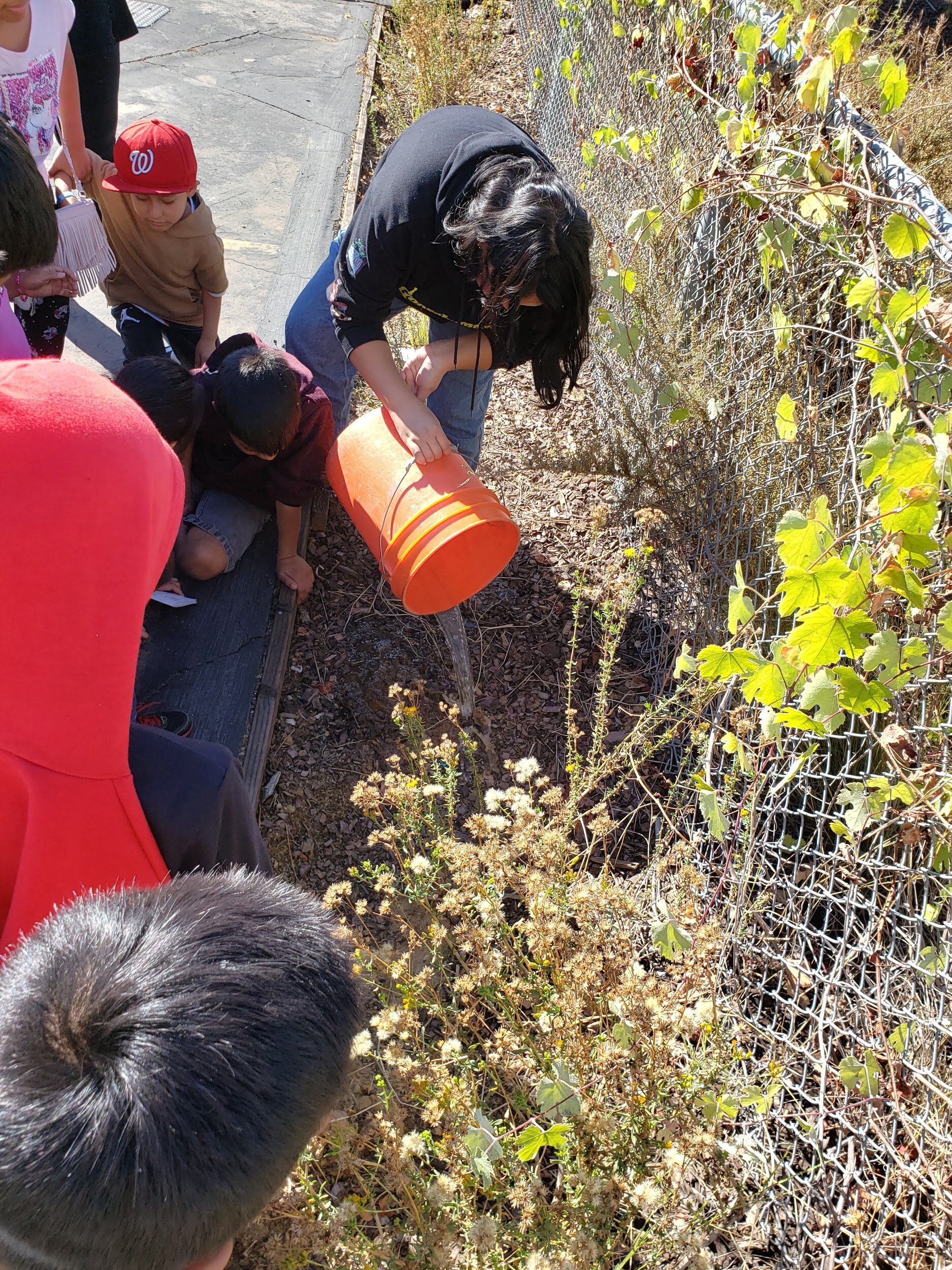
After the migration game, we talked about watershed and water runoff. The students conducted an experiment where they pour water on asphalt and then pour water in the habitat. The students got to hypothesize, observe, and draw conclusions on the experiment.

The day had a lot of content, but it was fun and very engaging. A week after the event, one of the young participants said that they wanted to recreate the migration game– which was very meaningful to hear that a simple game can make a big impact. Is this the end though?

No, community building is not a one event type of deal. In 2020 and beyond, Emily and LAAS staff and interns hope to continue this bond of community and nature whether through nature walks or habitat restoration.

Habitat Restoration and Collaboration

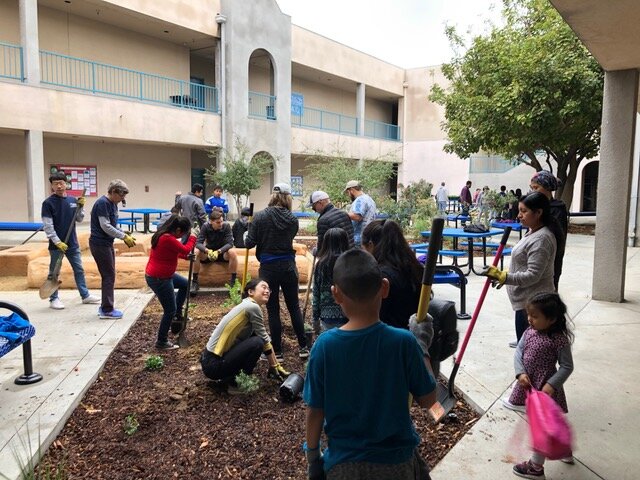
On December 7, 2019, Los Angeles Audubon staff, community volunteers, along with students and their parents, helped to expand Esperanza’s schoolyard habitat. Two areas were planted with native species: the large courtyard at Esperanza Elementary School, and the area along Wilshire Blvd. Students of Esperanza spread out along the campus photographing everyone hard at work and also photographing birds out and about. Rain held out just long enough for a group of hardworking volunteers from Fulbright and from the Westwood Presbyterian Church, as well as students with their families to plant toyon, ceanothus, penstemon, buckwheat and other native plants to attract birds and pollinators. Many of the species were chosen to tolerate shady conditions because the courtyard area is often in part to full shade during the year. Principal Brad Rumble and his students led the group on a campus tour at the end of the planting to view the original schoolyard habitat, planted by the school community and Los Angeles Audubon in 2017 that is thriving with the recent rains.

As the event came to an end, every single person was given the chance to disperse native plant seeds of California Poppies and other perennials onto the habitat area they weeded from invasive plants. The event was supported by US Fish and Wildlife and Westwood Presbyterian Church.

The following photo gallery shows the habitat restoration at Esperanza in progress.

Western Tanager, Vol. 86 No. 3, Jan-Feb 2020

Rare Bird Alert - January 3, 2020

Trumpeter Swan | Red-necked Grebe | White-winged Dove | American Oytercatcher | Pacific Golden-Plover | Solitary Sandpiper | Short-eared Owl | Northern "Yellow-shafted" Flicker | "Black" Merlin | Ash-throated Flycatcher | Brown-crested Flycatcher | Tropical Kingbird | Greater Pewee | Pacific-slope Flycatcher | Eastern Phoebe | Cassin's Vireo | Cliff Swallow | Dark-eyed "Gray-headed" Junco | Dark-eyed "Pink-sided" Junco | Orchard Oriole | Black-and-white Warbler| Northern Parula | Palm Warbler | Painted Redstart | Summer Tanager

Rare Bird Alert - December 13, 2019

Tundra Swan | White-winged Scoter | Black Scoter | Red-necked Grebe | White-winged Dove | American Oystercatcher | Pacific Golden-Plover |Pacific Loon | “Black” Merlin | Ash-throated Flycatcher | Tropical Kingbird | Hammond’s Flycatcher | Pacific-slope Flycatcher | Pacific Wren | Harris’s Sparrow | Dark-eyed “Gray-headed” Junco | Black-and-white Warbler | Painted Redstart | Summer Tanager

Rare Bird Alert - November 15, 2019

White-winged Scoter | Black Scoter | Long-tailed Duck | White-winged Dove | Sandhill Crane | American Oystercatcher | Pacific Golden-Plover | Red Knot | Laughing Gull | Yellow-crowned Night-Heron | Ash-throated Flycatcher | Tropical Kingbird | Hammond’s Flycatcher | Red-throated Pipit | Lapland Longspur | Clay-colored Sparrow | Grasshopper Sparrow | White-throated Sparrow | Dark-eyed “Gray-headed” Junco | Bobolink | Black-and-white Warbler | MacGillivray’s Warbler | American Redstart | Painted Redstart | Summer Tanager | Lazuli Bunting | Painted Bunting

Birds of the Season — October 2019

There’s no doubt that fall migration is a great time for birders. “Southbound migration” might be a better term, given that the passage takes place from June through November. Even that isn’t exact, as not all migrants are headed south. Tropical Kingbirds are an obvious example of a species whose movements are to the north and west.

Message From Your President

As President of Los Angeles Audubon Society, I want to thank you, members and volunteers, all for a great year! As I look back over 2019, I am grateful to have been a part of our efforts at conservation, community science, education, and spreading the joy of bird watching. With the recent reports of the decline of bird numbers (insert citation), our efforts at local conservation and habitat restoration is what we can do to make a difference. Think globally but act locally – That is what we are doing here in Los Angeles to provide more and better habitat for birds and humans alike.