
INSIDE THIS ISSUE
COLUMNS
Red-necked Grebe | Inca Dove | White-winged Dove | Pectoral Sandpiper | Solitary Sandpiper | Red-throated Loon | Brown Pelican | Western Cattle-Egret | CRESTED CARACARA | Tropical Kingbird | THICK-BILLED KINGBIRD | White-throated Sparrow | Green-tailed Towhee | Ovenbird | Northern Waterthrush | Black-and-white Warbler | Tennessee Warbler | Chestnut-sided Warbler | Palm Warbler | Pine Warbler | Black-throated Green Warbler | Summer Tanager | Indigo Bunting
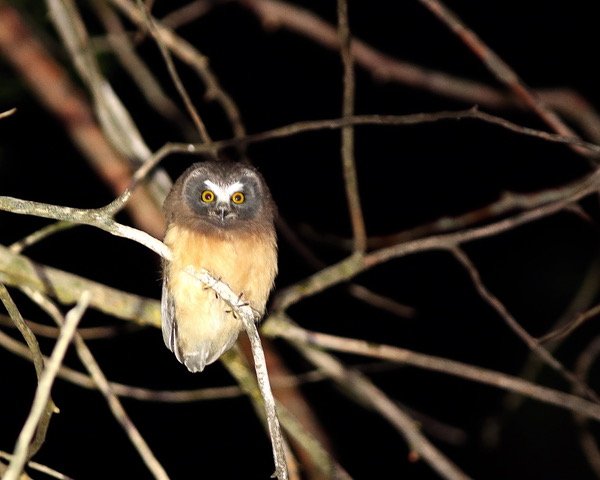
We will be leading a Southern Sierra Nevada Owl Prowl July 3-6 Friday to Monday (departure day). Three nights of owling, (and days of birding) SWEEEETTTT!! We have been leading this trip for 20 years or so. If you can’t bear to stay up after midnight, or sleep in a bit, please reconsider.
John Schmitt, illustrator of the National Geographic Field Guide will join us as a co-leader.
February and early March offered typically pleasant weather, with many continuing rare birds and a handful of new ones, as well as the arrival of a few Neotropical migrants. By late March these migrants were becoming more obvious and widespread, with some already on territory. Breeding activity for resident birds was underway well before that.
INSIDE THIS ISSUE
COLUMNS
The world-famous geese residing in Westchester, California, as everyone knows, love to hang out in the sunny green fields next to LAX airport during the day and watch the airplanes take off and land. They sit in amazement and discuss the size of the planes and try to distinguish between a Pratt & Whitney, Lockheed Martin, Boeing, Northrop Grumman, or Rolls Royce, etc. They spend hour upon hour pondering the cutting edge engineering and technology involved in running one of the busiest airports in the world.
As a Peace Corps volunteer in Kenya a few (OK, “many”) years ago, I taught physics at a rural secondary school and maintained a rear, prep area stocked with cabinets and shelves of paraphernalia for classroom demonstrations and laboratory assignments. Since the school was only about 8 miles north of the Equator, classrooms usually were open-air for natural ventilation.
But there is one bird that has recently returned that always reminds me of a dear friend, and mentor, who literally changed the course of my life. Barbara Courtois was the coordinator of the Environmental Education Program at Ballona when I first became a volunteer at the wetlands, in 1999. She would proudly tell you that she was a “lifelong learner”.
Whatever the world post-Covid looks like — for me, I hope it includes more birding and more biking. Living in a world that has had and continues to have so much taken by Covid, it has also drawn into relief those things which matter a lot, and for me, I can confidently list: being outside and being active. These are the two no-brainer actions that make my “matter-most” list. Whenever anyone asks me if I want to do an outside activity I answer, “Let’s go!” Under my breath daily I offer thanks into the universe for my family and my job.
The Ballona Wetlands Ecological Reserve (BWER) is the last coastal wetland in Los Angeles. It is sandwiched generally between Marina del Rey to the north, Playa Vista to the east, bluffs to the south, and the double dune system to the west, separating it from the Pacific Ocean. The wetlands are bisected by the Ballona Flood Control Channel, which carries rainwater and dry season urban flow from the upper Ballona Creek Watershed through the urban core to the ocean. The BWER is owned and managed by the California Department of Fish and Wildlife (CDFW), a State resource agency.
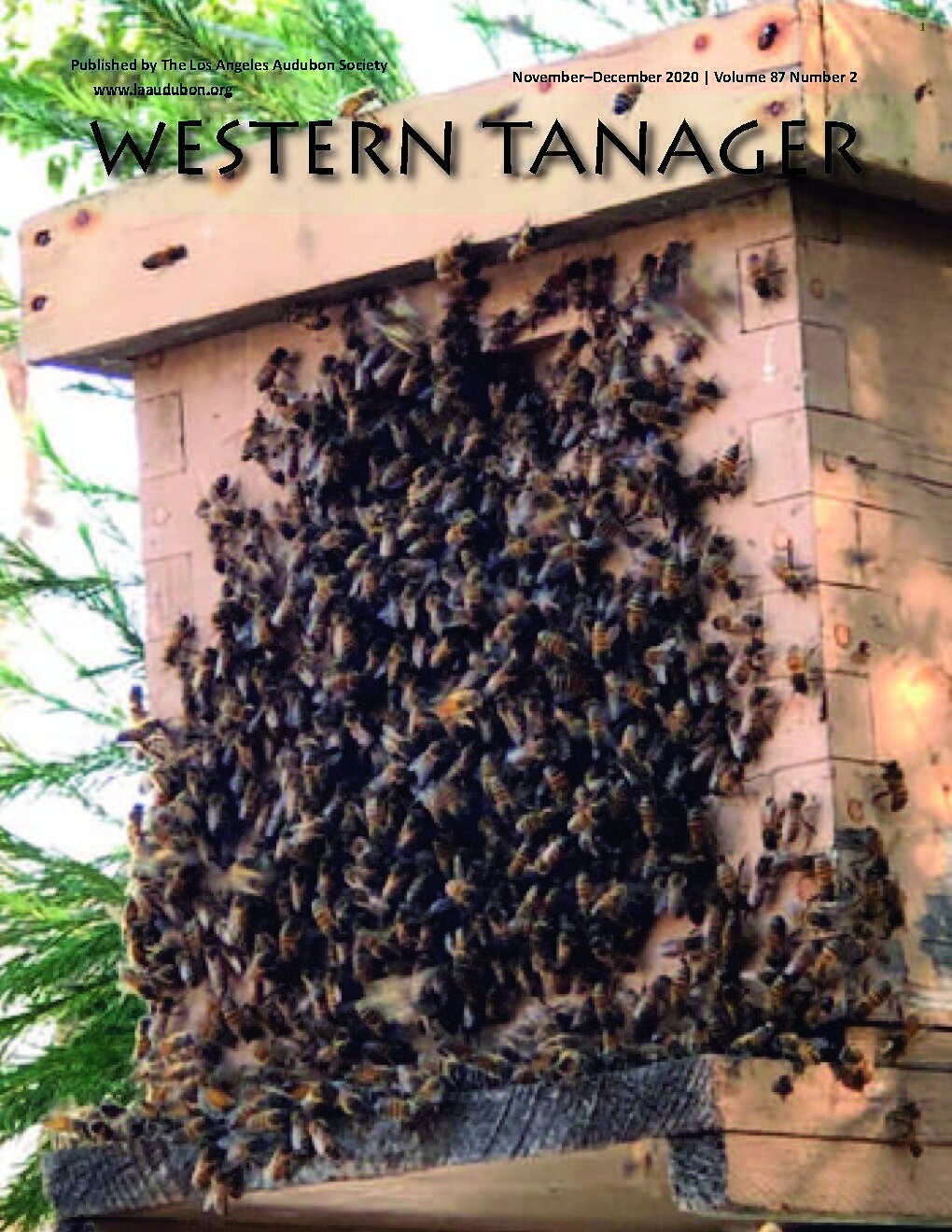
A swarm of thousands of bees swooped into our front yard on a recent hot afternoon in October. The sound was incredible, buzzing so loudly that it attracted the attention of my neighbors. The bees quickly formed a cluster about double the size of a large football, piling up one on top of another in our bracelet myrtle tree. Then the buzzing stopped and they were calm.
Sign up to join our mailing list to receive our newsletter and updates on upcoming events.